
For more than a century, Iowa agriculture has thrived in a sweet spot of plentiful rainfall, fertile topsoil, and gently rolling landscapes. Go further west, and precipitation begins to dwindle. But in a normal year, Iowans enjoy adequate rainfall and abundant groundwater.
Or at least, that has been the perception.
Water resources are finite

“Iowa is traditionally thought of as a water-abundant state,” confirms Greg Brennan, a hydrogeologist with the Iowa Geological Survey (IGS), part of IIHR—Hydroscience and Engineering at the University of Iowa College of Engineering. “We have quite a few different sources of groundwater supply, known as aquifers, depending on where you are,” he says.
“But as it turns out, quantity does not guarantee availability,” Brennan says. “Our aquifers are, for the most part, finite, with potential yield limits imposed by the aquifer itself, facilities and operation constraints, and competing users.”
Concerns about water quantity in Iowa are growing after recent severe droughts caused water levels in municipal wells to drop precipitously. In 2023, water levels in Belle Plaine’s city wells dropped by 14 feet, forcing officials to impose restrictions. Several other rural water systems and municipalities faced the same difficult situation. Such water level declines are common in shallow river alluvial aquifers during drought, but also quickly reversed when precipitation returns.
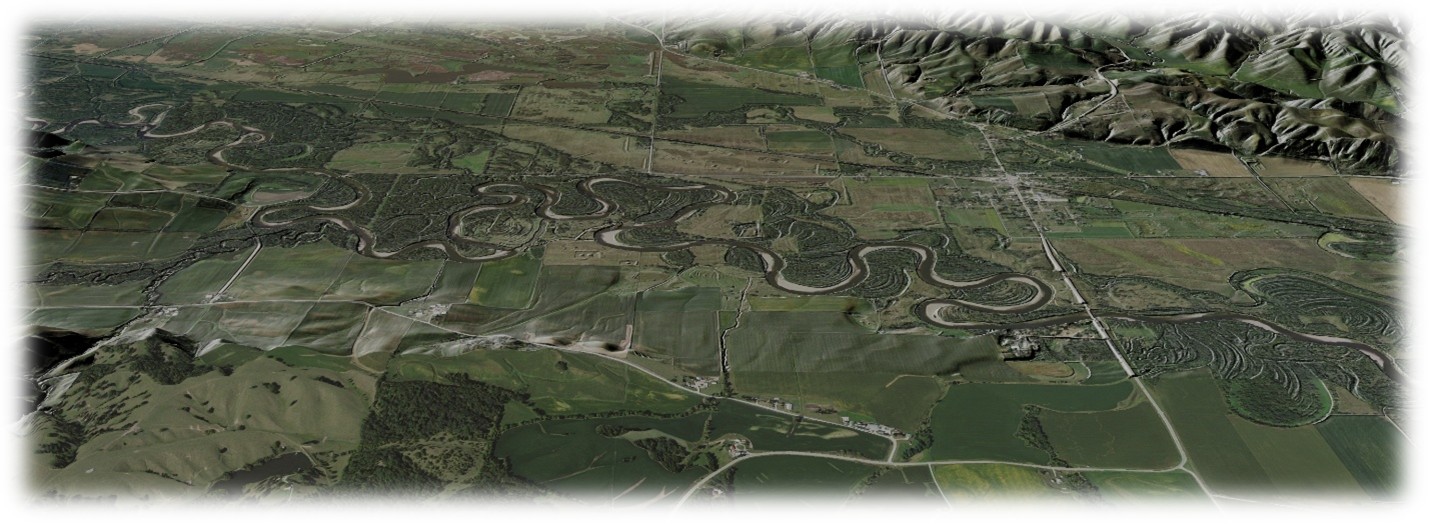
Brennan says that droughts, coupled with increasing demands for water, can create local and regional water level stress in Iowa’s shallow, thin alluvial aquifers, and even temporary restrictions on water use in some areas.
But with proper aquifer management and conservation, Brennan says, the state’s aquifers and groundwater resources will provide adequate water quantity into the future.
For that to happen, however, we need to better understand our aquifers.
What’s going on in the aquifer?
In 2025, the Iowa Legislature approved a one-year appropriation of $250,000 for the IGS to lead a pilot study of an important Iowa aquifer.
In the first of these studies, Brennan conducted a one-year research project in the Iowa River valley alluvial aquifer between Marshall and Johnson counties. Each year, the IGS will focus on another alluvial aquifer, which can be found in the sand and gravel deposits beneath river valleys.
Brennan’s goal was to better understand the quantity, distribution, and sustainability of the water in the Iowa River valley alluvial aquifer. He and his team used several techniques to learn what’s going on in the aquifer:
- Geophysical methods (passive or active seismic and electrical resistivity) allow researchers to scan large areas using remote-sensing tools to map underground geology as inferred from the electrical and acoustic characteristics of the subsurface materials;
- Direct and more labor-intensive geologic and hydrologic methods (drilling, sampling, well installation, and soil testing) provide a real-point data sample; and
- Hydrogeologic characterization, which can determine the hydrologic parameters of the aquifer, bedrock topography, stratigraphy, and more.

The results of Brennan’s study show that the Iowa River alluvial aquifer is sustainable at the current rate of use. However, these shallow alluvial aquifers are especially susceptible to seasonal changes and drought, which can mean dropping water levels.
“You can very quickly run out of water at any particular point,” Brennan says. “Operationally, you can’t sustain water production if you don’t have the available water coming into the well.” That can mean problems for communities along the Iowa River that use the alluvial aquifer as a source of drinking water, including Marshalltown, La Grand, Tama, Chelsea, Belle Plaine, Marengo, the Amana Colonies, and Iowa City.
But, he adds, there’s no need to panic. There’s plenty of water — about 188 billion gallons of groundwater stored in this segment of the aquifer, compared to 1.1 billion gallons of current annual demand.
“It’s not necessarily an overall stored quantity issue,” Brennan says. “It’s more of a localized use issue. The thin nature of the aquifer really imposes the limits on production.”
Water for the future
This project demonstrates the value of such studies, which integrate geologic and hydrologic analyses to support groundwater planning and provide a framework for future aquifer assessments across Iowa.
Understanding our water resources and using them wisely, Brennan says, will support long-term economic development and help sustain quality of life in our state.