Articles from February 2026
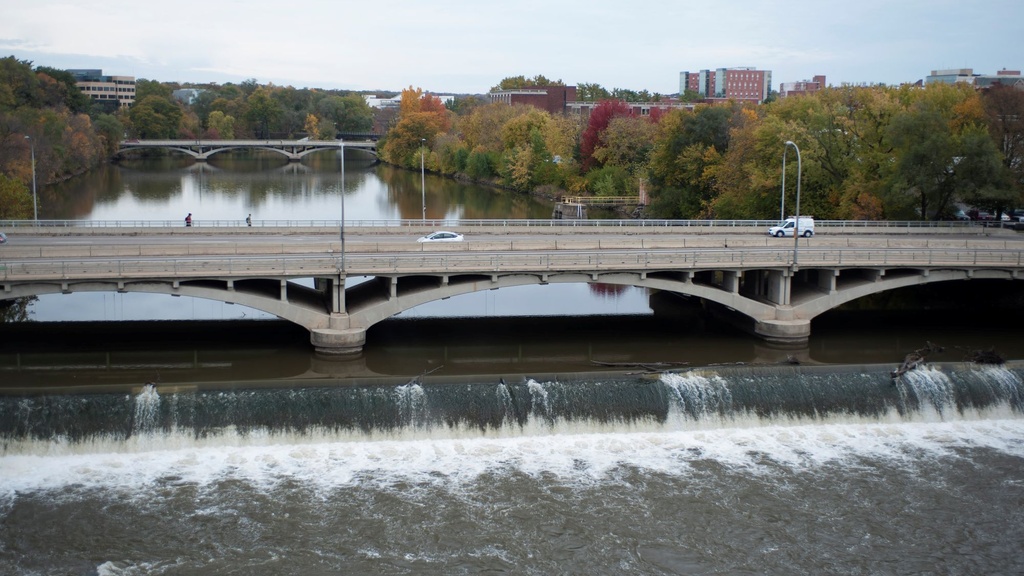
Understanding Our Aquifers
Monday, February 23, 2026
In 2025, the IGS led a pilot study of the Iowa River valley alluvial aquifer between Marshall and Johnson counties. The goal was to better understand the quantity, distribution, and sustainability of the water in the aquifer.

Iowa could be on the cusp of a hydrogen rush; lawmakers weigh regulations
Thursday, February 19, 2026
It’s no secret that Iowa is home to large geological formations that are rich in hydrogen-producing rocks, but the question in recent years has turned to whether or not that hydrogen can be extracted in meaningful quantities.

Stern Wins Regents Award for Faculty Excellence
Thursday, February 19, 2026
IIHR‘s Fred Stern is among the winners of the Regents Award for Faculty Excellence. Stern is the George D. Ashton Professor of Hydroscience and Engineering and professor of mechanical engineering in the College of Engineering. He is one of six University of Iowa faculty members honored for their extraordinary contributions and sustained record of excellence in teaching, scholarship, and service.

Iowa research engineer invents physics-based approach for measuring river flow
Wednesday, February 18, 2026
A University of Iowa research engineer has invented a custom physics-based approach for measuring the flow in rivers and streams, which could benefit applications ranging from design of structures to flood warnings to resource management.

Eastern Iowa aquifer running dry as demand outpaces supply
Wednesday, February 18, 2026
JOHNSON CO., Iowa (KCRG) - Growth in North Liberty, Solon, and Tiffin is draining an aquifer faster than it’s being replenished, according to U.S. Geological Survey data presented to concerned residents.

KCCI Investigates: Nitrate removal facility runs for a month, uncommon for winter
Wednesday, February 11, 2026
DES MOINES, Iowa — The nitrate removal facility at Central Iowa Water Works has now been running for a full month. The readings for nitrates in the Des Moines and Raccoon Rivers were as high as 17 milligrams per liter in January.